
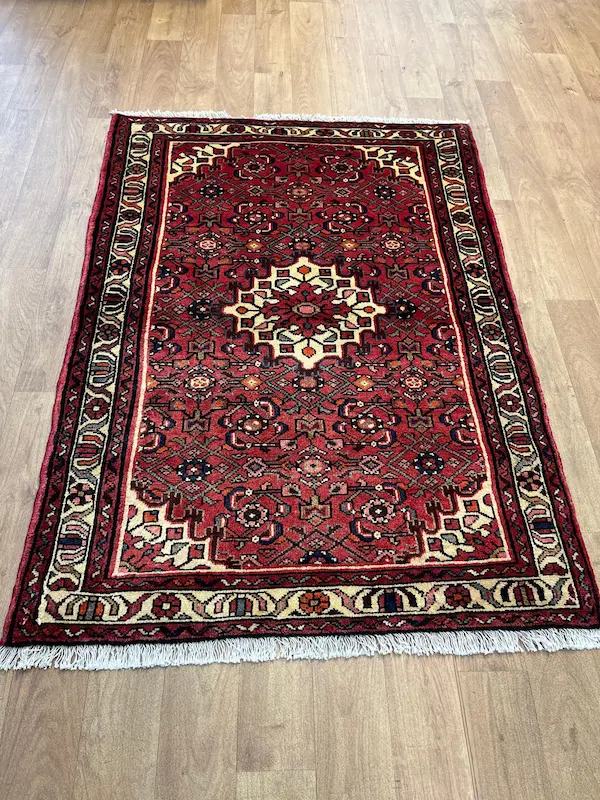
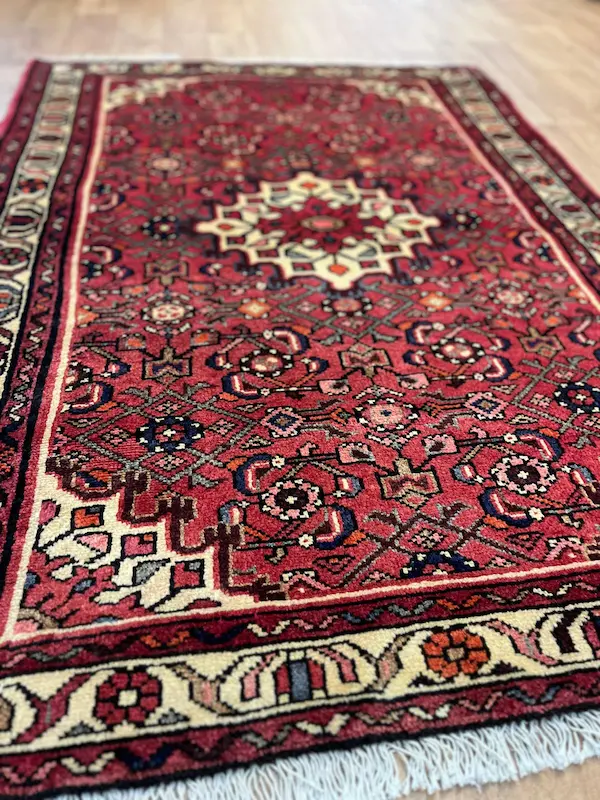
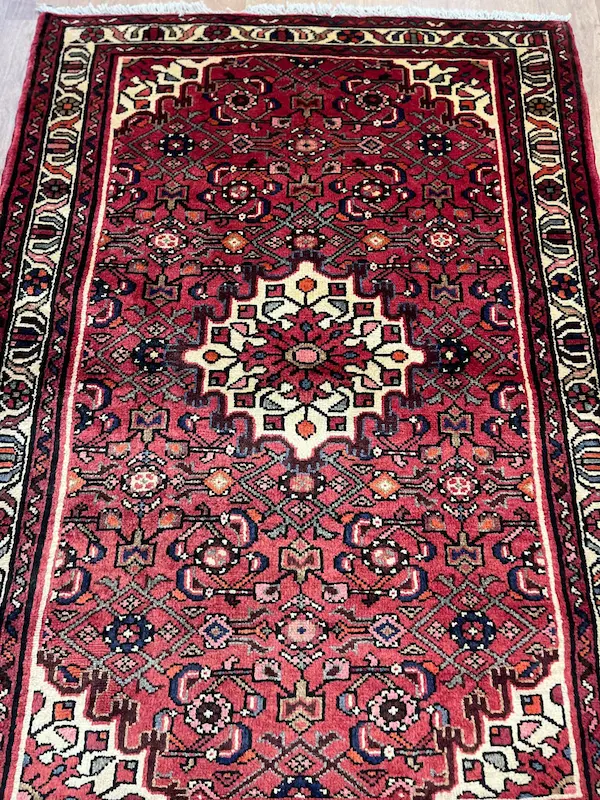

Hamadan has been famous for its carpets and rugs. Sometimes these are simply generically called ‘Hamadan’, but in fact very little weaving takes place in the town itself, so we tend to give each rug the name of the village where it originated. One of the most famous of these villages is Hosseinabad, which is located to the north-east of the city. The carpets and rugs have a very good reputation. All sizes are woven, and they have two characteristics. Firstly, like all Hamadan village weaves, they are single-wefted. This means that one row of wefts is introduced between each row of knots, and the warp threads are exposed as little dots on the reverse. An excellent density can be obtained. Secondly, the rugs are nearly all woven in the Herati or ‘mahi’ pattern, which is one of the oldest Iranian all-over designs. Though blue grounds are occasionally found, most Hosseinabad rugs and carpets have a red ground
This is a perfect example of Hosseinabad weaving. There is a good pile; the red ground has been dyed with madder which is beautifully patinated. As is typical of red ground rugs, contrast is provided by the border. The scale of the pattern is larger than is usually seen; this renders the individual elements more distinct, and reminds us that one of the names for this pattern, ‘mahi’, actually means ‘fish’, the story being told that the design represents fish swimming round the reflexion of the moon in a pool of water
Related products
-
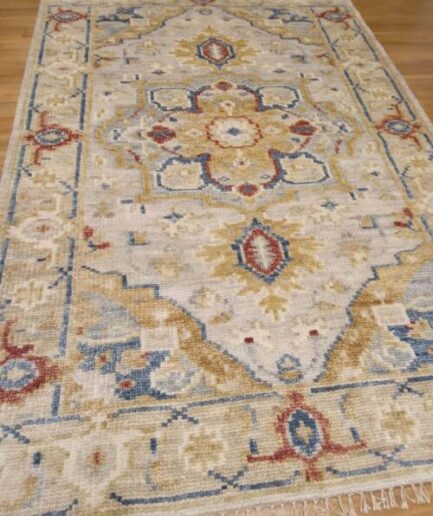
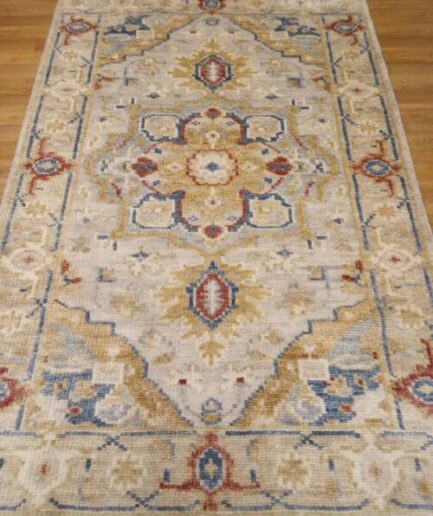
Ushak – 245x162cm
£650.00 -


Tribal Abadeh Rug – 367x251cm
£3,900.00 -
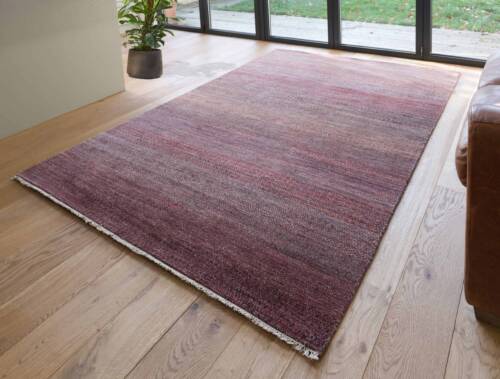
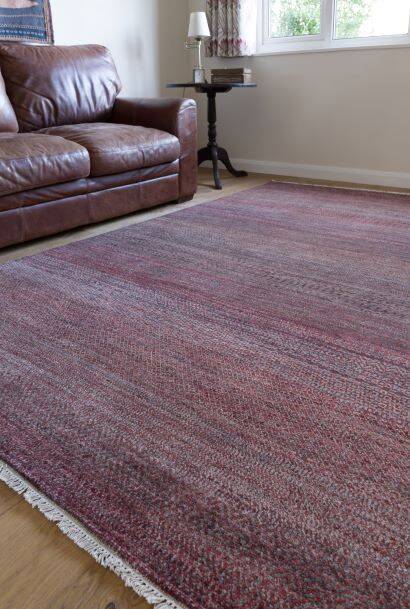
Patri – Dream Amber – 183 x 122 cm
£850.00 -
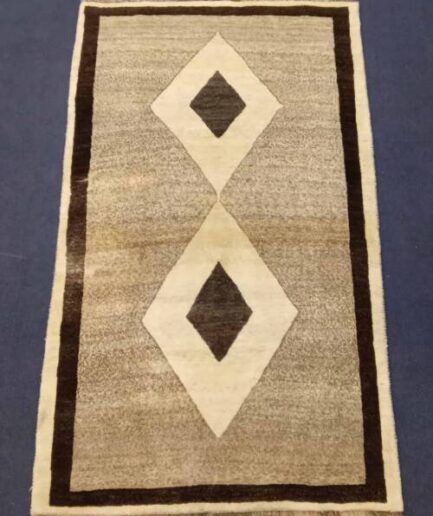
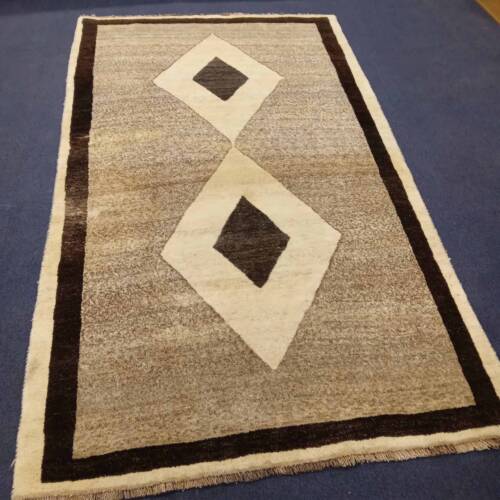
Vintage Persian Gabbeh – 242x140cm
£1,500.00


