Kilim Rug vs Persian Rug: What Is the Difference?
The main difference between a kilim rug and a Persian rug is how they are made. A kilim rug is flatwoven, usually with no pile, which gives it a thinner, lighter and more relaxed feel. A Persian rug is usually hand-knotted with a pile, giving it a softer, thicker and often more detailed finish.
Both styles can be beautiful, practical and full of character, but they suit different homes and uses. A kilim rug may be the better choice if you want a decorative flatweave with bold pattern, easy layering and a more informal feel. A Persian rug may suit you better if you prefer a plusher surface, traditional detail and a more formal statement piece.
This guide explains the key differences between kilim and Persian rugs, including construction, materials, pattern, comfort, durability, maintenance and where each style works best in the home.
Quick Comparison: Kilim Rugs vs Persian Rugs
| Feature | Kilim rug | Persian rug |
|---|---|---|
| Construction | Flatwoven | Usually hand-knotted |
| Pile | No pile | Usually has pile |
| Feel | Thinner, firmer and lighter | Softer, thicker and heavier |
| Pattern style | Geometric, symbolic and often bold | Detailed, floral, medallion or border-led |
| Common materials | Wool, cotton or wool-cotton blends | Wool, silk, cotton foundation or blends |
| Best for | Layering, relaxed interiors, decorative use | Formal rooms, comfort and statement interiors |
| Maintenance | No pile to trap as much debris, but still needs care | More pile to clean, often heavier to move |
| Room feel | Characterful, rustic, bohemian or contemporary | Classic, ornate, traditional or refined |
This table gives the quick answer, but the right choice depends on how you plan to use the rug and the type of room it will sit in.
What Is a Kilim Rug?
A kilim rug is a flatwoven rug made by interlacing warp and weft threads rather than knotting pile onto a foundation. This gives kilims their distinctive thin, flexible structure.
Unlike many traditional pile rugs, kilims do not usually have a thick surface. The pattern is created through the weave itself, which often makes the design visible on both sides. This is one reason kilims are popular for relaxed interiors, layered looks and rooms where texture and pattern matter.
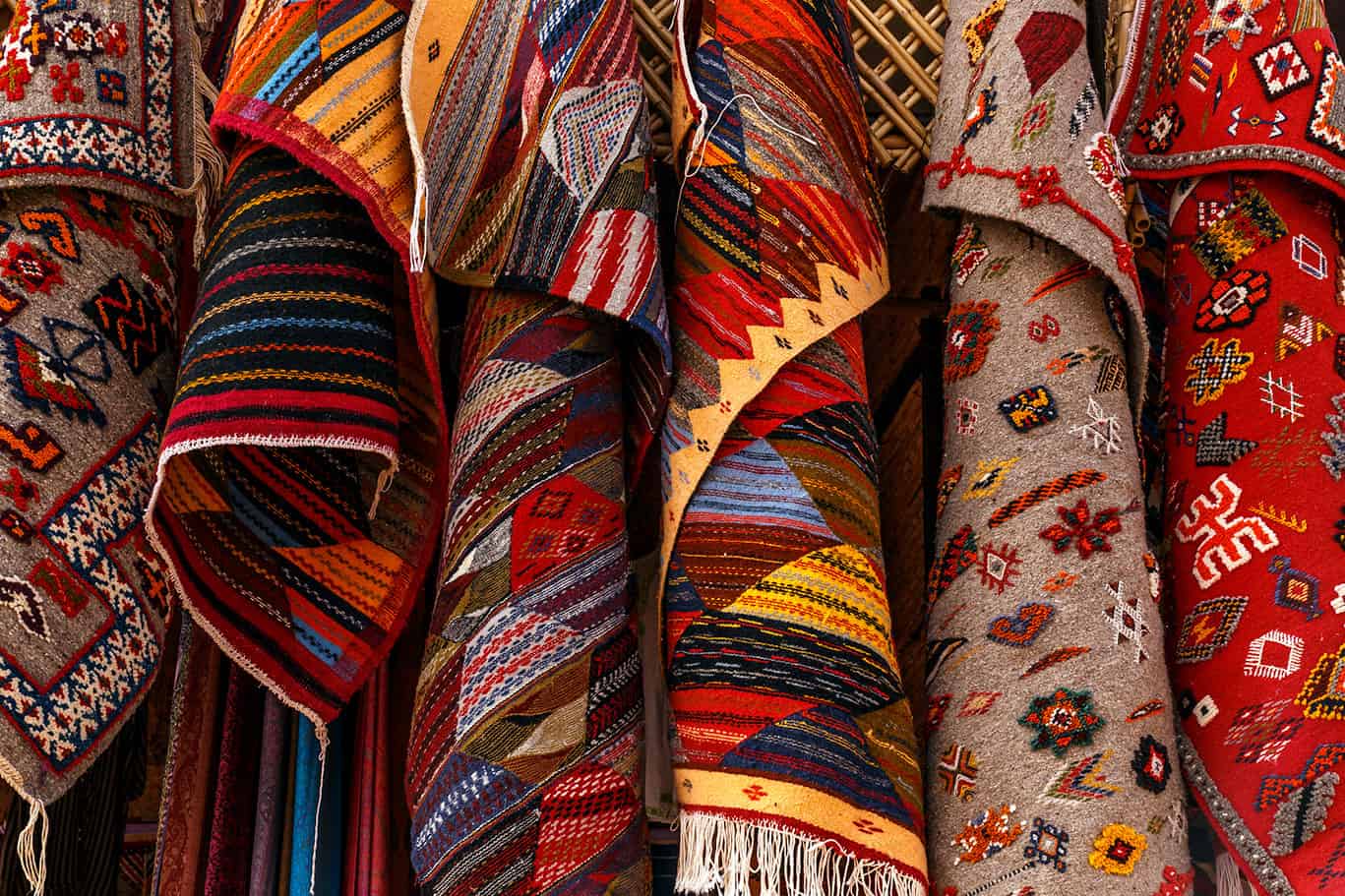
Kilim designs are often known for geometric motifs, strong colour combinations and decorative detail. They can feel traditional, rustic, artistic or contemporary depending on the colours and pattern.
Because they are thinner than pile rugs, kilims can work well in spaces where a lower-profile rug is useful. They can also be easier to move, reposition or layer with other rugs. However, their lighter construction means they may benefit from suitable underlay, especially on smooth floors.
If you are looking specifically for this type of flatwoven style, browse the kilim rugs collection.
What Is a Persian Rug?
A Persian rug is traditionally associated with rugs made in Persia, now Iran, and is known for detailed craftsmanship, hand-knotting and intricate design. Many Persian rugs are made with a pile, which gives them a thicker and softer surface than a flatwoven kilim.
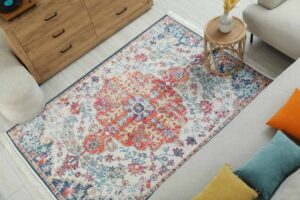
Persian rug designs often include central medallions, floral patterns, borders, vines and finely detailed motifs. They are commonly associated with more formal, classic or traditional interiors, although they can also be used in modern homes as a statement contrast.
It is important to note that not every traditional-looking rug is a Persian rug. “Persian” refers to a specific origin and style tradition. Many rugs are Persian-inspired or traditional in appearance without being genuine Persian rugs.
A well-made Persian rug can be long-lasting, but quality, age, materials and construction vary. Some are everyday decorative rugs, while others are valuable collectible pieces that require specialist care.
How Are Kilim and Persian Rugs Made Differently?
Construction is the biggest difference between the two.
A kilim is flatwoven. The threads are woven across each other to create both the structure and the pattern. There is usually no raised pile, which makes the rug thinner and more flexible.
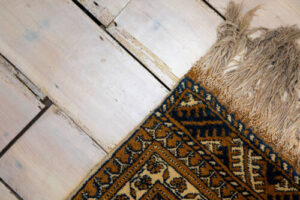
A Persian rug is usually hand-knotted. Individual knots are tied onto a foundation, then cut to create pile. This process gives the rug depth, softness and detail. The more finely knotted the rug, the more intricate the design can be.
This difference affects how each rug feels and performs.
A kilim is usually:
- Thinner
- Lighter
- Firmer underfoot
- Easier to move
- Often reversible or near-reversible
- Better suited to layering
A Persian rug is usually:
- Thicker
- Softer
- Heavier
- More cushioned
- More detailed in pattern
- More formal in appearance
Neither construction is automatically better. They are simply designed differently. The better option depends on the look, feel and practical use you want.
How Do the Patterns and Colours Differ?
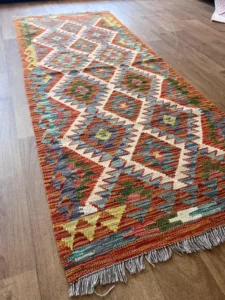
Kilim rugs are often recognised for bold geometric designs. Common features include diamonds, stripes, stepped shapes, symbolic motifs and repeated patterns. The colours may be earthy, warm, bright or strongly contrasting.
This makes kilims useful when you want a rug that adds character without feeling too formal. They can suit rustic homes, modern spaces, bohemian schemes, neutral rooms that need warmth or layered interiors with natural textures.
Persian rugs often have more intricate and flowing designs. Common features include floral motifs, central medallions, ornate borders and detailed pattern work. They can feel elegant, traditional and decorative.
A Persian rug can become the centrepiece of a room, particularly in a living room, study or bedroom. A kilim, by contrast, often feels more relaxed and versatile. It can still be a focal point, but it tends to sit more casually within the wider scheme.
Which Rug Feels Better Underfoot?
This depends on what you mean by “better”.
If you want softness and cushioning, a Persian rug will usually feel more comfortable underfoot because of its pile. It can add warmth and a more luxurious feel to bedrooms, sitting rooms and lower-traffic areas.
If you prefer a firmer, flatter and more textured surface, a kilim may be more suitable. Kilims do not usually offer the same softness as pile rugs, but they can feel practical, lightweight and characterful.
A kilim may be better where you want:
- A lower-profile rug
- Easier layering
- Less bulk under furniture
- A decorative woven look
- A rug that feels relaxed rather than plush
A Persian rug may be better where you want:
- Softness underfoot
- Traditional detail
- A thicker surface
- A more formal centrepiece
- Extra warmth in a room
If using a kilim on a hard floor, a suitable underlay can make it feel more stable and comfortable.
Which Rug Is More Durable?
Both kilim and Persian rugs can be durable when well made, but durability depends on materials, weave quality, placement and care.
Kilim rugs can be practical because they have no pile to crush. Their flatwoven structure means they can handle everyday use well when placed appropriately. However, because they are often lighter and thinner, they may move more easily on smooth floors if not secured with suitable underlay.
Persian rugs can also be extremely long-lasting, particularly when made from good-quality wool and cared for properly. Their pile can feel soft and substantial, but it may also collect more dust and show wear in heavy-use areas over time.
The better question is not simply which rug is stronger. It is which rug suits the room.
For example, a kilim may be a good choice for a layered living room, a decorative bedroom or a hallway where a low profile is helpful, provided it sits securely. A Persian rug may work beautifully in a sitting room or bedroom where comfort and detail are priorities.
Which Rug Is Easier to Clean and Maintain?
Kilim rugs can be easier to shake out, move and vacuum because they are thinner and have no deep pile. Less debris becomes trapped in the surface compared with a thick pile rug.
However, kilims still need careful treatment. Natural fibres, woven patterns and dyes can be sensitive to moisture, harsh cleaning products and aggressive scrubbing. Flatwoven edges can also need care to prevent fraying.
Persian rugs may need more careful cleaning because dust and debris can settle into the pile. Valuable, antique or finely made Persian rugs should usually be professionally cleaned rather than treated with household products.
For both types:
- Vacuum gently
- Avoid over-wetting
- Blot spills rather than rubbing
- Keep them away from prolonged damp
- Rotate them occasionally to balance wear
- Use suitable underlay where needed
Neither type should be treated as maintenance-free. The right care depends on the fibre, dye, age and construction of the rug.
Which Rooms Suit Kilim Rugs Best?
Kilim rugs are versatile and can work in several rooms, especially where you want pattern, texture and a lower-profile finish.
Living Rooms
A kilim can add warmth and character to a living room without making the space feel too heavy. It works particularly well with wooden floors, neutral sofas, leather furniture, natural materials and layered interiors.
Because kilims are thinner, they can sit neatly under coffee tables and occasional furniture. Use an underlay if the rug moves on hard flooring.
Bedrooms
Kilim rugs can soften a bedroom visually without adding a deep pile. They work well at the side of a bed, under the lower section of the bed or as a decorative accent in a calm, neutral scheme.
If softness underfoot is your main priority, you may prefer a thicker rug. If pattern and character matter more, a kilim can be a strong choice.
Hallways
A flatwoven rug or runner can work well in a hallway because it has a lower profile. However, movement and safety matter. A rug that shifts, curls or lifts at the edges can become a trip hazard.
For long or narrow spaces, dedicated runners may be more suitable than trying to make a standard rug fit the area.
Home Offices
Kilim rugs can suit home offices because they are flatter than thick pile rugs. This can make furniture placement easier, especially around desks and chairs. If you use a wheeled chair, check that the rug sits securely and does not bunch.
Which Rooms Suit Persian Rugs Best?
Persian rugs are often chosen for rooms where comfort, detail and visual impact are important.
Living Rooms
A Persian rug can become the centrepiece of a sitting room. It works well where the furniture arrangement allows the rug to be seen and appreciated, rather than hidden under too many heavy pieces.
Bedrooms
The softness of a pile rug can work well in a bedroom, especially if you want comfort around the bed. A traditional pattern can also add depth and warmth to a simple room scheme.
Dining Rooms
Persian rugs can be used in dining rooms, but there are practical considerations. Chair movement, food spills and cleaning all matter. A low-to-medium pile may be easier to manage than a deep pile, and the rug should be large enough for chairs to remain on it when pulled out.
Formal Spaces
If you want a refined, traditional or decorative statement, a Persian rug may suit a formal sitting room, study or reception space. It can add a sense of heritage and detail that a simpler flatweave may not provide.
Is a Kilim Rug or Persian Rug Better for Your Home?
The better option depends on your priorities.
Choose a Kilim Rug If…
A kilim rug may suit you if you want a rug that feels decorative, flexible and characterful without being too thick or formal.
Choose a kilim if:
- You like geometric patterns
- You want a lower-profile rug
- You prefer a relaxed or layered look
- You want a rug that is easier to move
- You like flatwoven texture
- You are styling a modern, rustic or bohemian room
- You need a rug that can sit neatly under furniture
A kilim is especially useful when you want visual interest without the plushness of a pile rug.
Choose a Persian Rug If…
A Persian rug may suit you if you want softness, detail and a more traditional statement.
Choose a Persian rug if:
- You prefer intricate patterns
- You want a softer feel underfoot
- You like traditional interiors
- You want a more formal focal point
- You are furnishing a sitting room, bedroom or study
- You are happy to care for a pile rug properly
A Persian rug can be a beautiful choice, but it should be selected carefully, especially if it is valuable, delicate or intended for a busy area.
Consider Another Rug Style If…
Neither option is automatically right for every home. You may want to consider another rug style if you need something very easy-care, extra soft, highly stain-resistant or specifically designed for heavy family use.
For example, a busy household with pets, children or frequent spills may prioritise cleanability over heritage style. A small room may need a simpler pattern, while a large room may need a bigger rug to anchor the space properly.
If room scale is your main concern, you may also want to compare large rugs for more generous living spaces.
Frequently Asked Questions
Are kilim rugs the same as Persian rugs?
No. Kilim rugs are flatwoven and usually have no pile. Persian rugs are usually hand-knotted with a pile and often have more detailed, ornate designs.
Are kilim rugs thinner than Persian rugs?
Yes, kilim rugs are usually thinner because they are flatwoven. Persian rugs are generally thicker because they have a pile.
Do kilim rugs need underlay?
Kilim rugs often benefit from underlay, especially on smooth floors. Underlay can help reduce movement, improve comfort and make the rug feel more secure.
Are kilim rugs good for living rooms?
Yes, kilim rugs can work very well in living rooms, especially if you want pattern, warmth and a relaxed flatwoven look. Choose the right size and use underlay if the rug moves.
Are Persian rugs always more expensive?
Not always. Some Persian rugs are highly valuable, especially antique or finely made examples, but prices vary widely depending on age, materials, size, knot density and condition.
Which rug is better for a modern home?
A kilim rug often works well in modern homes because its geometric patterns and flatwoven texture can add warmth without feeling overly formal. However, a Persian rug can also work beautifully in a modern space as a traditional contrast.
Kilim rugs and Persian rugs are both distinctive, but they offer different qualities. Kilims are flatwoven, thinner and often more relaxed, with bold patterns and flexible styling options. Persian rugs are usually pile rugs, often softer and more detailed, with a stronger traditional feel.
If you want a lightweight, decorative rug with character, a kilim may be the better fit. If you want softness, intricate detail and a more formal statement, a Persian rug may be more suitable.
The right choice depends on your room, lifestyle, furniture and the level of care you are comfortable with. Think about how the rug will be used as well as how it looks.
For help choosing a rug that suits your home, style and practical needs, contact Rugs of Dorset.
Phone: 01305 605550
Email: info@rugsofdorset.co.uk
Find out more: contact Rugs of Dorset